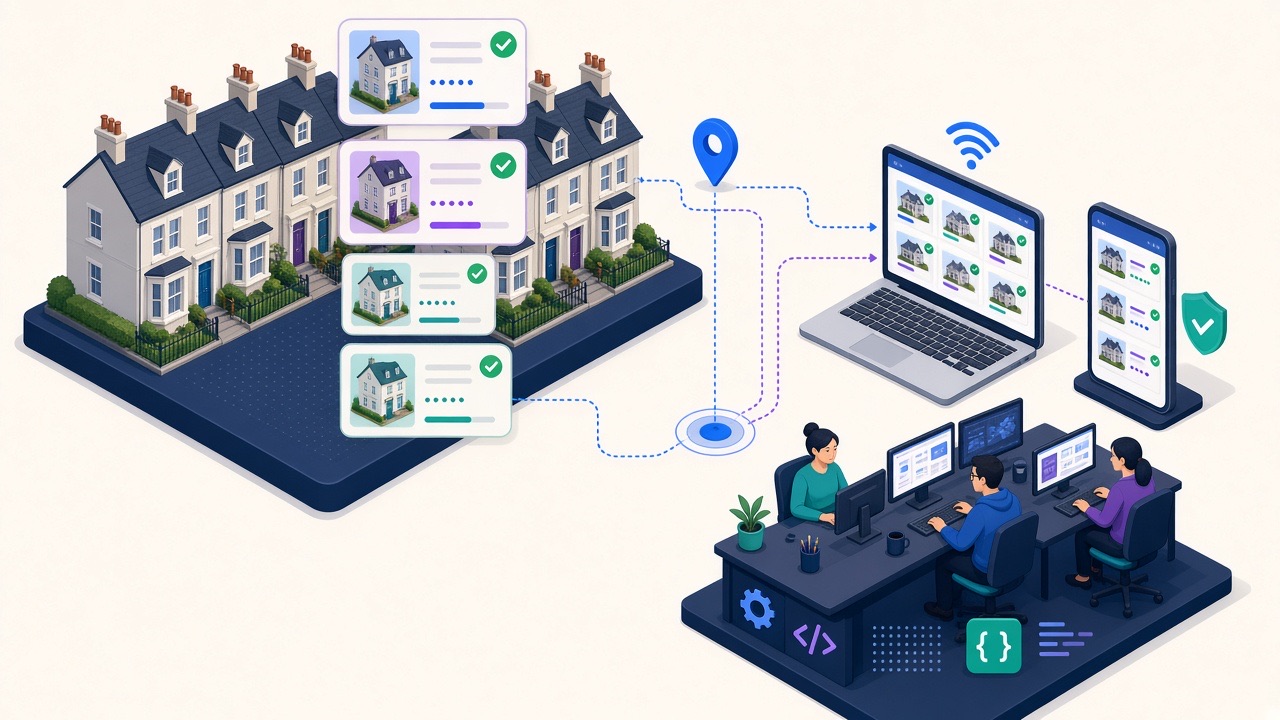
Buyers and vendors expected property detail that stayed accurate across counties, including mortgage commercial transactions, foreclosure records, and bankruptcy records maintained to stringent standards. Any material mistake in published data carried legal risk. Latency between the source database and the website or app was not tolerable.
The operating problem behind the product ask
The agency already worked through authorised access to official sources. What they lacked was a platform that could absorb extract-verify-publish workflows, keep replication tight, and expose the same truth on web and mobile. That combination is where project-style outsourcing usually frays: the team that writes the first integration is not the team that owns data correctness six months later.
How a dedicated team shaped the delivery
The engagement combined data entry and QA specialists with product engineers on a shared cadence. Official transaction documents and local HUD-level sources were captured, verified, and fed into a time-based database integrated with the website and mobile application. Backend and web technology included C#, .NET, Entity Framework, Web API, MVC, SQL Server, and Azure, chosen for operational clarity, not novelty.
| Control | Why it mattered |
|---|---|
| Verified extract before publish | Legal exposure on wrong property facts |
| Low replication latency | Buyers and vendors need the same live truth |
| Shared web and mobile surface | One product, not two diverging codebases |
| Named ownership after go-live | Data quality does not end at launch |
Why this maps to a dedicated India GCC team
You keep product direction, acceptance of data rules, and commercial priorities. A dedicated India team carries durable engineering ownership inside your toolchain (repositories, releases, and incident habits) while MedRec employs and houses the people. Staff augmentation can close a short skill gap; it is a weaker fit when correctness and latency must be owned for years.
If leadership later wants the India footprint inside its own entity, Build Operate Transfer remains available. For this class of product, most sponsors start dedicated: prove the operating rhythm, then decide on captive ownership.
What the team owned day to day
The team was not a feature factory. It owned the property data pipeline end to end: ingesting listings, validating them against verified sources, and making sure the same record appeared consistently on web and mobile. It also owned the release process, monitoring, and the backlog of data-quality issues raised by agents and customers.
That ownership changed the conversations with the business. Instead of asking for individual fixes, product leaders could discuss outcomes such as fewer stale listings, faster updates after price changes, and quicker search, and trust the team to find the right engineering approach.
Lessons for product leaders
Data-heavy products reward continuity. The engineers who understand where each field comes from, which sources are reliable, and how edge cases behave are hard to replace. Rotating people through such a system resets that knowledge and usually brings old bugs back.
Invest early in automated data checks, clear ownership of each integration, and dashboards that show data freshness. These make quality visible to non-technical stakeholders and give the team a shared definition of success that goes beyond shipping features.
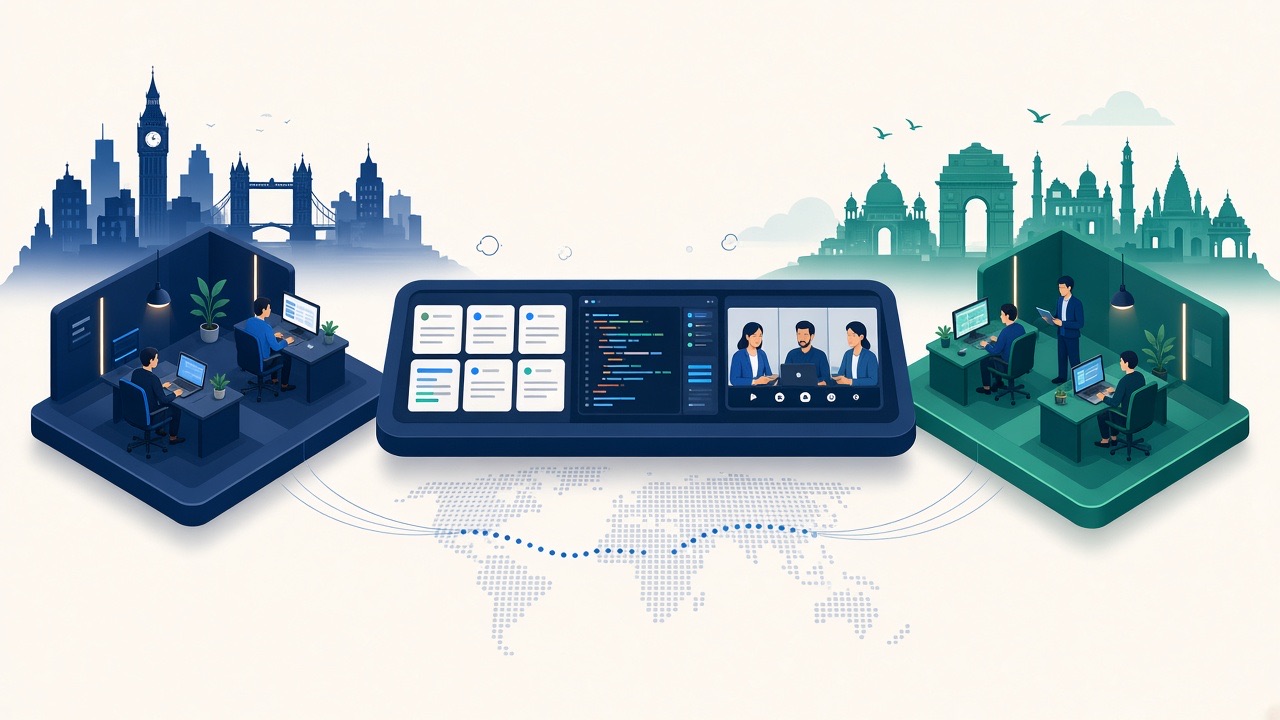
Working with a London business from India
The time difference worked in the product’s favour once the rhythm was agreed. Agents and product leaders raised issues during the UK day; the India team picked them up in the shared overlap window, clarified anything ambiguous live, and had fixes or answers ready for the next UK morning. Weekly planning and fortnightly demos kept both sides looking at the same priorities, and a shared backlog meant nothing was lost between email threads.

Working through this in your own GCC plan?
We will give a direct answer on a short call.