
The wrong way to decide is to start with a commercial mid-point and reverse into a model. The right way is to name the year-three destination: do you expect to run India payroll and facilities yourself, or do you want a long-lived partner-employed team that still feels like yours?
When BOT is the better fit
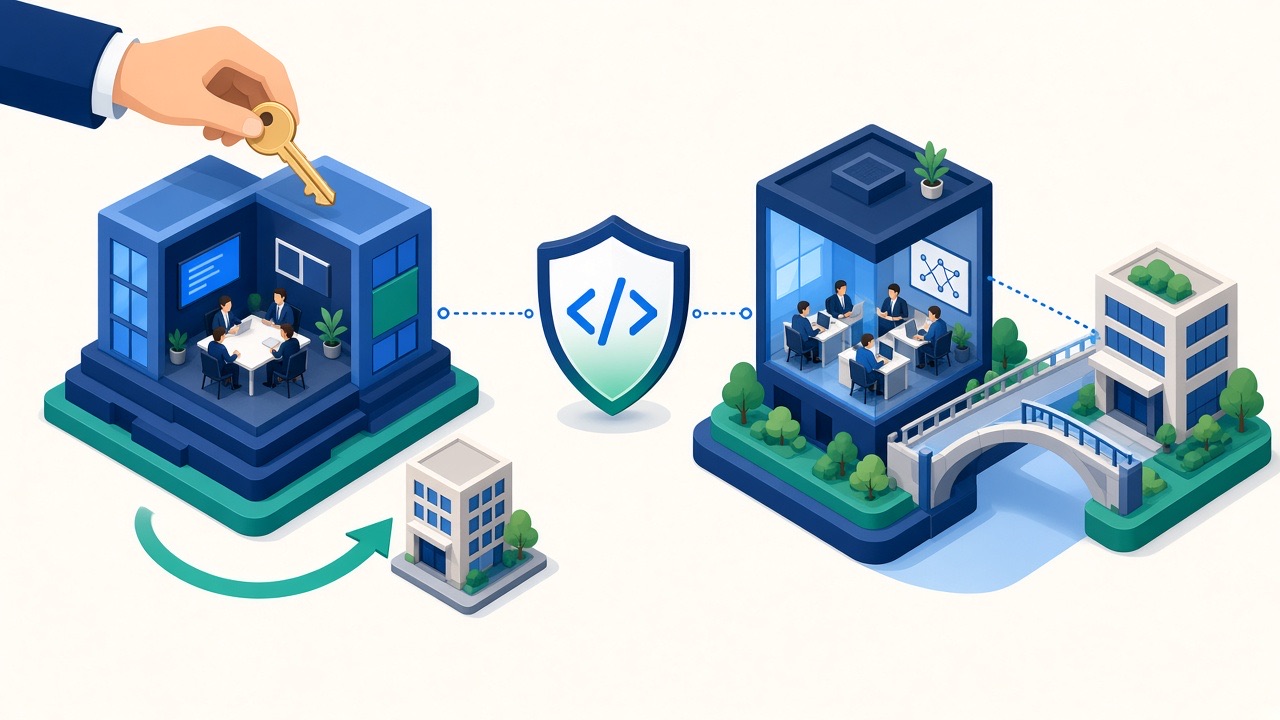
BOT fits companies planning a long-term captive GCC. Typical terms run three to five years. You keep strategic direction, roadmap, and leadership alignment while MedRec carries GCC setup, operations, hiring, infrastructure, governance, and scaling. Exit is a full operational transfer to your entity, not an informal wind-down.
Prefer BOT when customers or regulators expect a distinct in-market entity with credible controls, when you expect to bring payroll and facilities under your own roof over time, and when you need early complexity handled while the roadmap proves itself. Transfer checklists for people, repositories, identity, and knowledge should be visible before the centre is large.
When a dedicated team is enough
Dedicated GCC teams suit long-term engineering capacity without operational ownership overhead. Typical terms are one year and beyond, with a 90-day transition notice. You keep product priorities, delivery direction, and roadmap. MedRec carries talent, operations, infrastructure, HR, governance, and team management as the legal employer in India.
Prefer dedicated when you have technical leadership in place, want predictable operating cost as priorities change, and do not yet want to run India payroll and facilities. Many companies start here, then move to BOT only if the captive destination becomes a board requirement.
| Question | Build Operate Transfer | Dedicated team |
|---|---|---|
| Destination | Your own India captive GCC | Durable capacity without India entity first |
| Typical term | 3–5 years | 1+ years |
| Exit path | Full operational transfer | 90-day transition notice |
| Engineer band (typical) | 20–100+ | 5–50+ |
Staff augmentation is a different question
Staff augmentation closes defined skill gaps under your day-to-day management, usually six months or longer, with a 60-day transition notice. It is not a substitute for either BOT or dedicated when you need long-horizon product ownership. It can be a bridge into dedicated once the operating rhythm proves itself.
IP and culture still matter
Model choice is not only commercials. IP assignment, repository continuity, and shared engineering culture diverge in practice between BOT and dedicated. Read the companion insight on BOT versus dedicated teams for IP and people strategy, then map the decision frame above to your entity timeline.
Signals that you are ready to own the centre
Ownership makes sense when the India team has become strategically important rather than simply useful. Common signals include leadership wanting India headcount on its own balance sheet, regulators or customers expecting direct employment, plans to grow well beyond the first team, and a desire to build local leadership that reports directly into the group.
If those signals are absent, a dedicated team usually gives you the benefits of named engineers, shared tools, and long-term product knowledge without the overhead of running an entity. You can still choose Build Operate Transfer later if the business case changes.
What the transfer itself involves
Transfer is a project, not a date. It typically covers entity readiness, employment contracts, payroll and benefits, workplace arrangements, systems and accounts, vendor contracts, and the knowledge held in documentation and runbooks. Planning it from the first year, rather than in the final quarter, keeps disruption low and protects retention through the change.

Working through this in your own GCC plan?
We will give a direct answer on a short call.